
1809–1864
Toronto Necropolis
Section K Lot 68
Peter Rothwell Lamb arrived in Toronto in 1834, the year of its incorporation. He would go onto build one of the city’s most well‑known early industries. By 1848, he had established the P.R. Lamb Manufactory at the end of Amelia Street, producing glue, stove blacking (a substance used in the 18th and 19th centuries to polish and protect cast-iron stoves) and leather goods. His son, Daniel Lamb (1842–1920), took over in 1860, expanding the operation into a sprawling complex of 12 buildings along Lamb’s Creek, directly north of the Toronto Necropolis. From 1849 to 1888, the factory was world-renowned and a major local employer, but its success came at a cost. The by‑products of boiling animal remains and industrial waste contributed to Lamb’s Creek becoming one of Toronto’s most polluted waterways, and as Victorian homes rose nearby, complaints mounted. The saga ended dramatically in 1888 when a fire destroyed the underinsured factory, marking the end of the site’s industrial use and paving the way for what is now Wellesley Park.
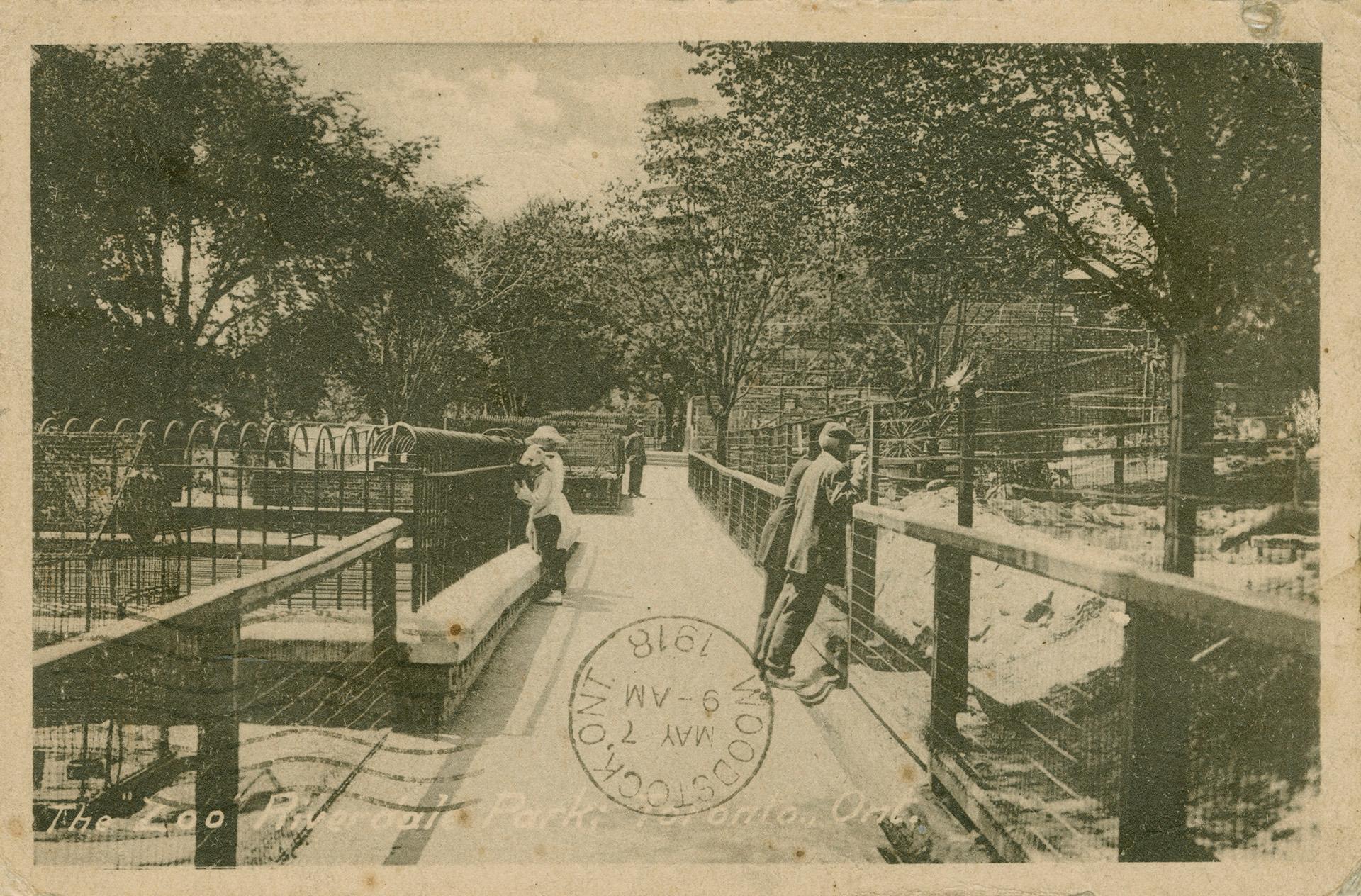
Daniel Lamb’s story didn’t end with industry. A prominent civic leader, he served as alderman and on the Board of Control, where he championed projects that reshaped Toronto: building Rosedale Valley Road, initiating waterworks on the Toronto Islands, reclaiming Ashbridge’s Bay, and, most famously, founding Riverdale Zoo in 1894. According to the Toronto Star, the zoo began with a simple gift: a few deer donated to the city. From that modest start, Riverdale Zoo grew into a beloved destination for families, schoolchildren and Sunday strollers, bringing wildlife into the heart of Toronto.
For decades, the zoo stood beside the Toronto Necropolis, creating one of the city’s most striking juxtapositions. Locals recall wandering among Victorian tombstones and hearing the distant roar of lions, a sound that seemed to ripple through time, mingling with the quiet of history. When the zoo closed in 1974 and its animals moved to the new Toronto Zoo in Scarborough, the roars faded, but the memory remains.
Today, the former zoo grounds are home to Riverdale Farm, a city-run attraction that opened in 1978. Designed as an educational space, the farm offers visitors a glimpse of rural life with heritage barns, livestock and gardens, all within steps of Toronto Necropolis. Today, visitors are more likely to hear the distant sounds of grunting pigs, bleating sheep or the neighing of horses. It’s a striking contrast to the site’s layered past and stands as a reminder of how urban spaces continue to reinvent themselves with each generation.
Source:
• Mount Pleasant Group – Daniel & Peter Lamb
• blogTO – A Brief History of the Riverdale Zoo
Photo: Toronto Public Library


