
1913–2008
Toronto Necropolis
Section K Lot 346
Born in Budapest, Hungary, Dora de Pédery-Hunt grew up in a family that valued music, learning and creativity. Initially drawn to physics and architecture, she chose art at 24, earning her master’s degree in sculpture in 1943. War soon uprooted her life. After fleeing Nazi-occupied Hungary and surviving years in Germany, Dora immigrated to Canada in 1948, arriving in Toronto with little more than determination.
Her early years were humble, working as a housekeeper and walking eight kilometers to teach art at a high school. In her spare time, she sculpted at her kitchen table. A breakthrough came in 1956 when her portrait of fellow sculptor Frances Loring caught the eye of the National Gallery’s director, leading to a Canada Council grant and European study tour. From then on, Dora’s career soared.
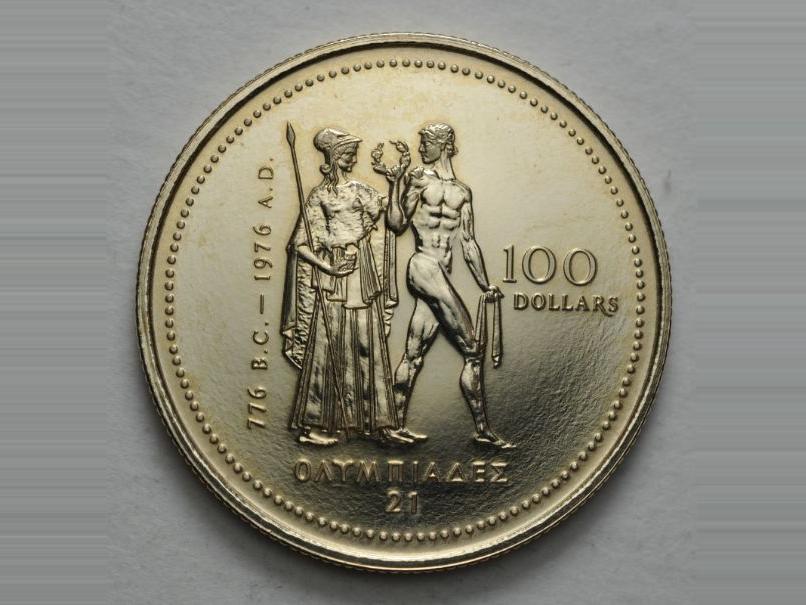
She introduced the ancient art of medal-making to Canada, creating over 600 medals and coins, including the 1967 Centennial Medal, the 1976 Olympic gold coin and commemorative pieces for the Hudson’s Bay Company. Most famously, she became the first Canadian citizen to sculpt Queen Elizabeth II’s effigy, appearing on Canadian coins from 1990 to 2003, a design that millions of Canadians and visitors to Canada carried in their pockets daily.
Honoured as an Officer of the Order of Canada in 1974, Dora’s works reside in the National Gallery of Canada, the British Museum and the Smithsonian. She passed away in Toronto in 2008 at age 94, leaving behind a legacy etched in metal and memory.
Sources:
• Wikipedia – Dora de Pédery Hunt
• The Canadian Encyclopedia – Dora de PéderyHunt
• Cabbagetown People – Dora de PéderyHunt
• Governor General of Canada – Order of Canada: Dora de PéderyHunt
Photo: Ebay


