
Mount Pleasant Cemetery
Plot Q Lot 60
Freemasonry has played a notable role in Toronto’s civic and cultural history, particularly during the city’s formative years in the 19th and early 20th centuries. Originating in England and Scotland as medieval stonemason guilds, Freemasonry evolved into a fraternal organization shaped by Enlightenment ideals of moral improvement, fellowship and civic responsibility. As British settlers arrived in Upper Canada, Freemasonry took root, and Toronto became a central hub for Canadian Masonic life.
By the mid-19th century, Freemasonry had become closely associated with Toronto’s political, professional and business leadership. Membership offered social connection, shared identity and access to influential networks at a time when personal relationships were critical to economic opportunity and public authority. Masonic ideals of order, reason and progress aligned with prevailing ideas of civic development, and Freemasons were active in municipal governance, philanthropy and public institutions.
This influence remains visible in Toronto’s built environment. Masonic symbols such as compasses, squares and columns appear in prominent civic buildings including Union Station, Old City Hall and the Ontario Legislative Building, reflecting the fraternity’s symbolic language and its presence within the public sphere.
At the same time, Freemasonry was a membership-based organization, and access to its networks was uneven. Like many fraternal institutions of the era, Toronto’s lodges reflected the social hierarchies of the time. Membership was limited to men and typically required nomination, reinforcing barriers tied to race, religion, class and social standing. In practice, Freemasonry functioned not only as a fraternal society, but also as a gatekeeper preventing many Torontonians from either entering or reaching their full potential in the city’s civic and economic life.
Freemasonry’s influence must also be understood within a broader landscape of fraternal power. For much of Toronto’s history, advancement in society often depended on overlapping affiliations with institutions such as the Anglican Church, the Orange Order and Masonic lodges. Together, these organizations shaped a vision of Toronto rooted in British Protestant norms, even as the city became increasingly diverse.
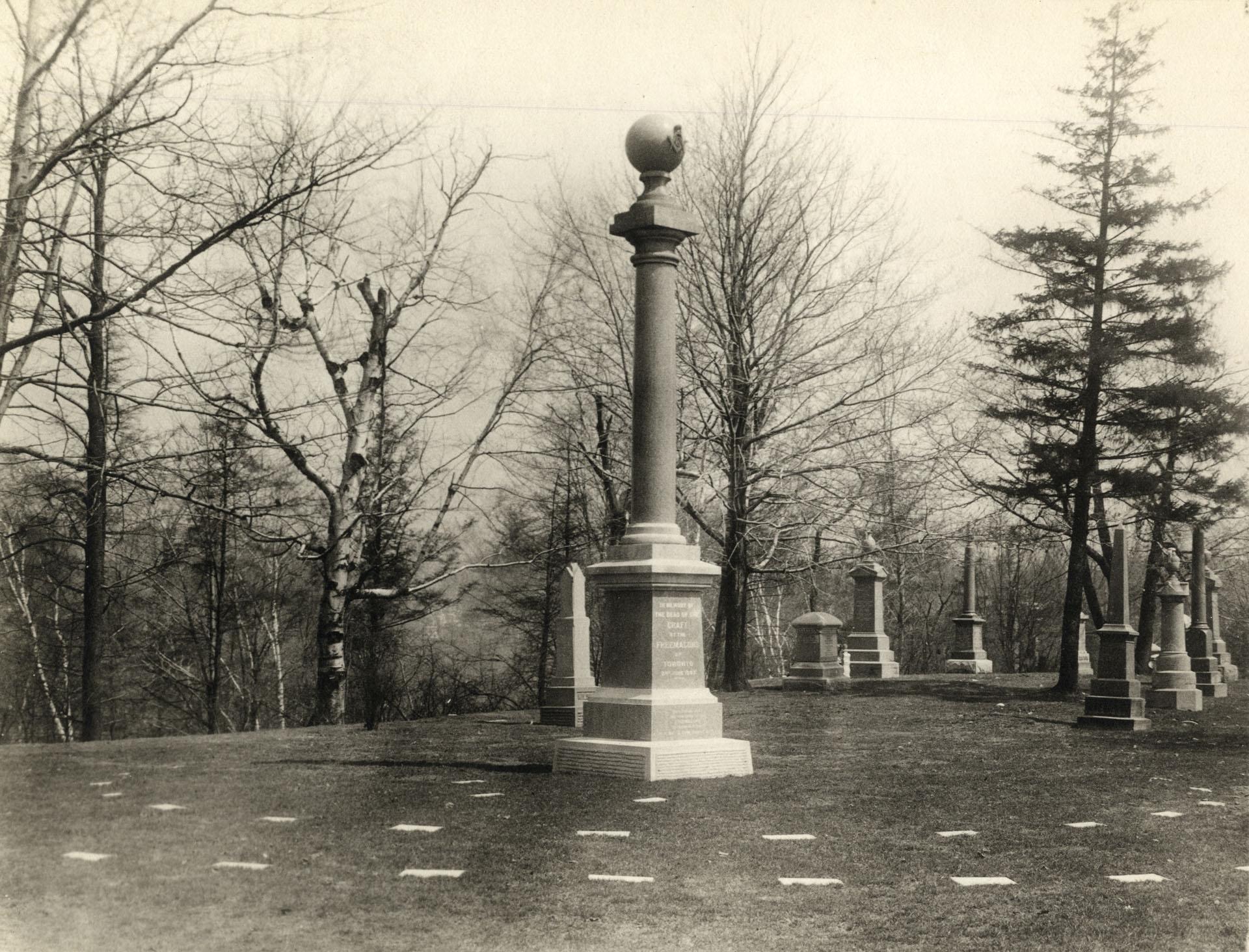
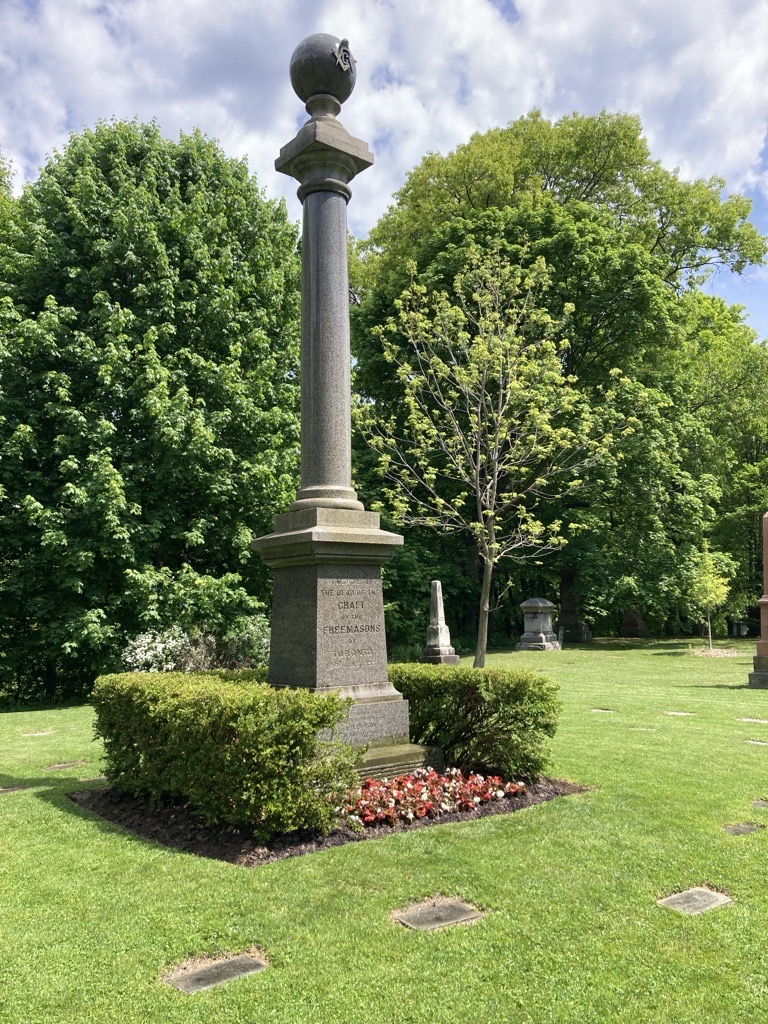
This layered legacy is reflected at Mount Pleasant Cemetery, where a Masonic monument stands among the graves of many notable Freemasons who helped shape Toronto’s institutions. Adorned with traditional symbols, the monument serves as both a tribute to their collective civic contribution and a reminder of how power, belonging and exclusion operated in the city’s past.
Sources:
• Freemasonry – The Canadian Encyclopedia
• Wikipedia – Freemasonry in Canada
• Freemason Holocaust Encyclopedia
• The Bridge Community News – Masons in Toronto
• The Toronto Star – Marching Backward
Photos:
• B&W - Digital Archives Ontario
• Colour - Courtesy of Mount Pleasant Group


