
1858–1957
Toronto Necropolis
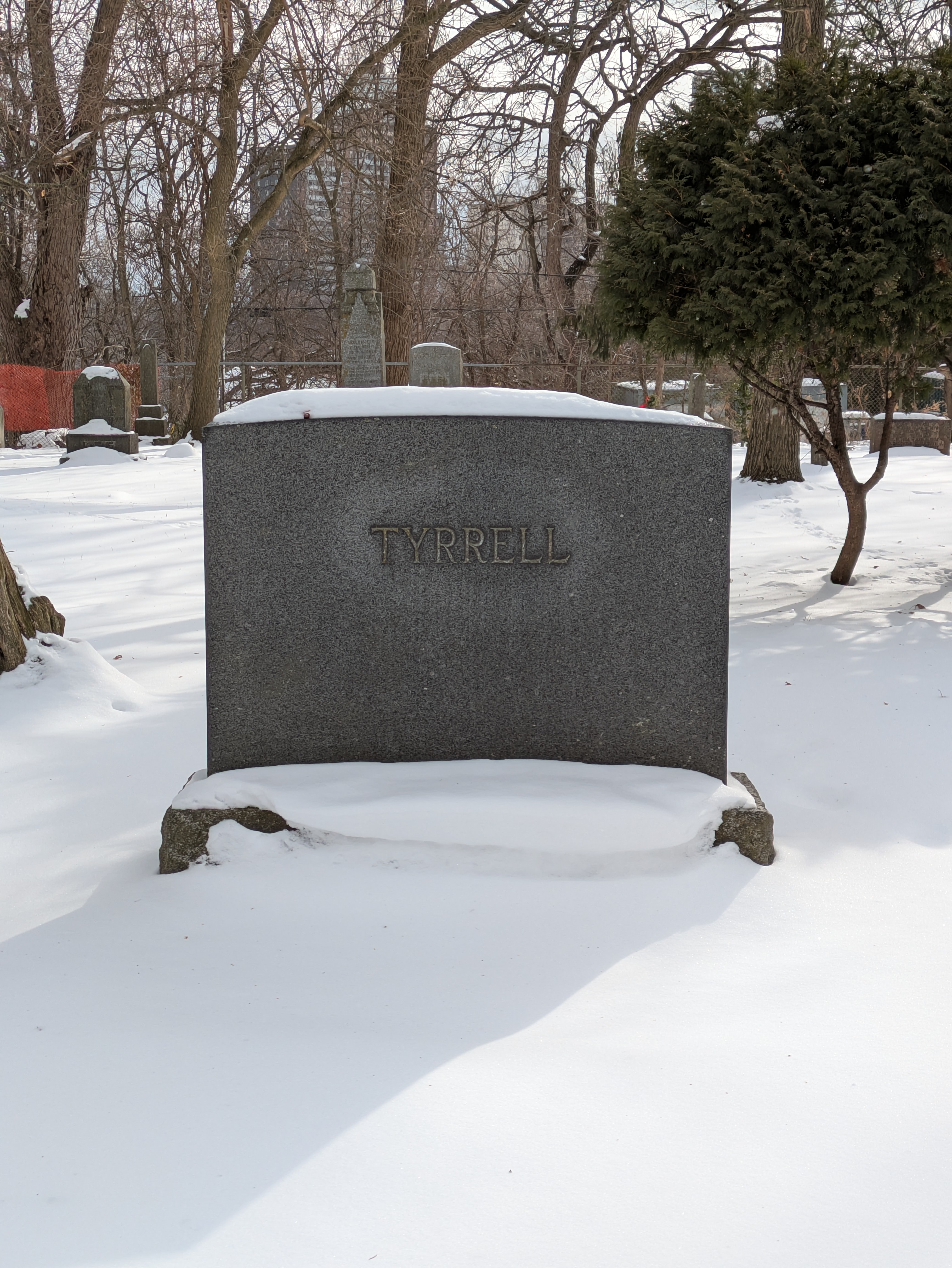
Section H Lot 154
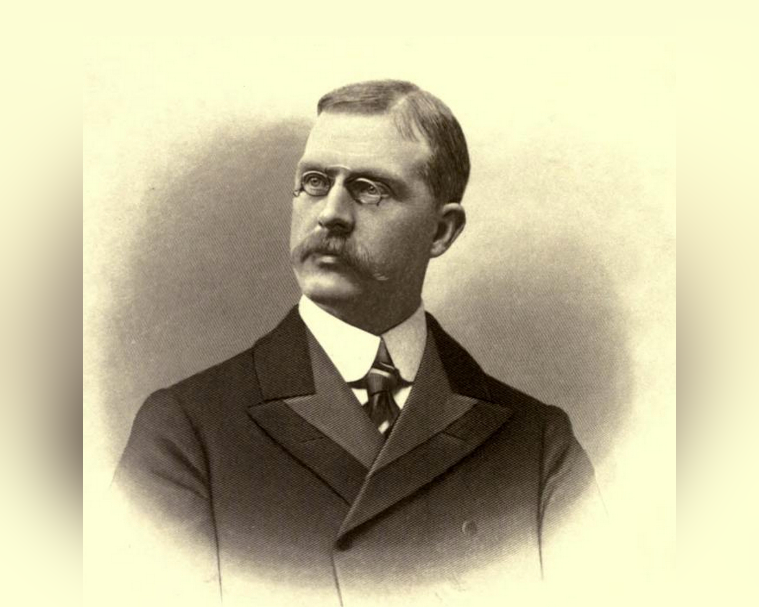
Joseph Burr Tyrrell was a geologist, explorer, historian and entrepreneur whose work strongly influenced Canada’s scientific and industrial identity. Born in Weston, Ont., Tyrrell joined the Geological Survey of Canada in 1881 and spent 17 years charting vast, unmapped regions of the continent’s north and west. His expeditions along the Dubawnt and Thelon rivers filled blank spaces on Canada’s maps and advanced knowledge in geography, botany and zoology.
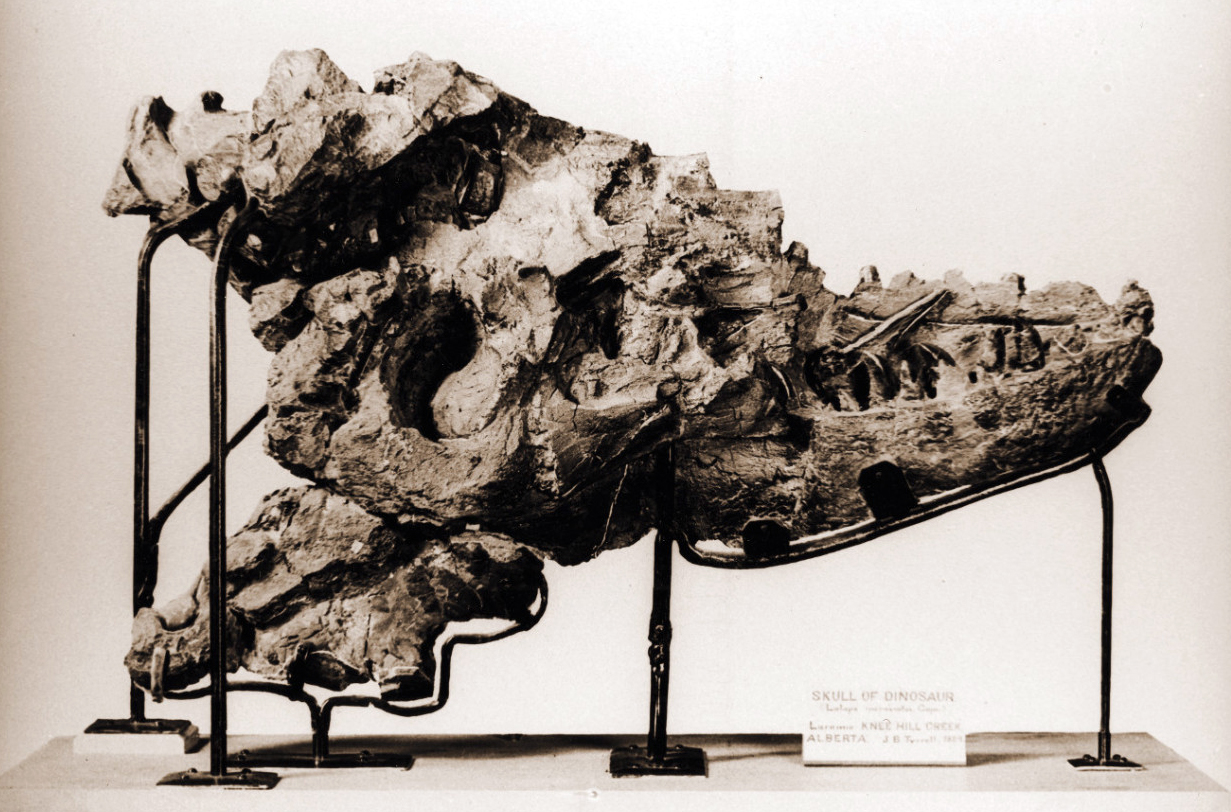
In 1884, Tyrrell astonished the scientific world by uncovering rich deposits of dinosaur fossils in Alberta’s Badlands as well as coal deposits at Drumheller, Alberta, and Fernie, British Columbia. These discoveries transformed paleontology and resource development in Canada. His name endures in the famous Royal Tyrrell Museum of Paleontology in Drumheller, a monument to his groundbreaking work and largest collection of fossils in Canada.
After leaving government service in 1898, Tyrrell pursued mining during the Klondike Gold Rush and later in northern Ontario. His bold decision to keep drilling at Kirkland Lake Mine in 1923 revealed gold deposits worth over $100 million, cementing his status as a titan of Canadian industry. He served as president of major mining companies for decades, refusing to retire until age 95.
Tyrrell was also a respected historian, editing the journals of Samuel Hearne and David Thompson, and leading the Champlain Society, which promotes enquiry into Canadian history. His contributions earned him the Royal Society of Canada’s Flavelle Gold Medal and numerous other honours.
And then, a surprise: late in life, Tyrrell purchased 600 acres for an apple orchard. Few imagined this quiet venture would become the Toronto Zoo, a beloved landmark and symbol of the city’s evolving identity.
Yet his story reflects a dual legacy: scientific triumph intertwined with the colonial mindset of his era. His expeditions often indirectly relied on Indigenous knowledge, but his work primarily served resource extraction rather than Indigenous inclusion, a reminder of the complexities behind Canada’s progress. This accomplished and complicated scientist found rest after a ceaselessly busy life in the solemn beauty of Toronto Necropolis.
Sources:
• Mount Pleasant Group – Joseph Burr Tyrrell
• The Canadian Encyclopedia – Joseph Tyrrell
• Wikipedia – Joseph Tyrrell
• Canadian Mining Hall of Fame – Joseph Burr Tyrrell
• Royal Tyrrell Museum – Museum History
• Glimpses of Canadian History – Joseph Burr Tyrrell
Photos:
• Headshot - Canadian Press Syndicate, public domain via Wikimedia Commons
• First found Albertosaurus skull, CMN 5600, public domain, Royal Tyrrell Museum
• Gravestone - Pat Farrell


