
1897–1979
Pine Hills Cemetery
Section 5 Lot 2263
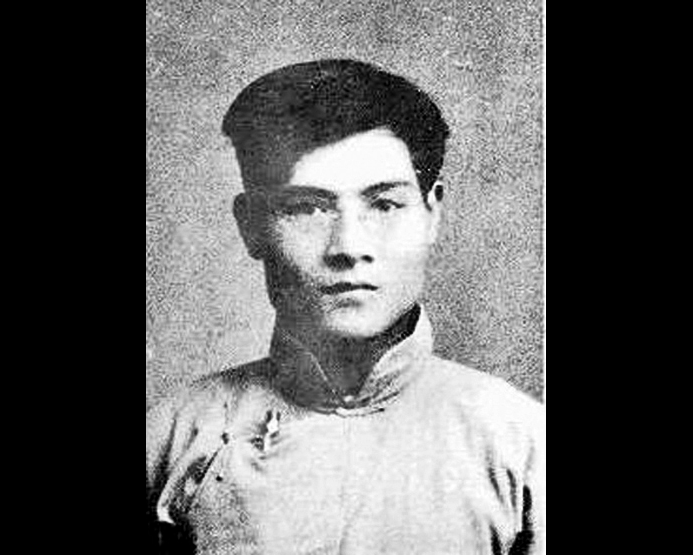
Kai Yin Chang was one of the most consequential figures in China’s revolutionary era, a founding father of the Chinese Communist Party and, for a time, Mao Zedong’s most formidable rival. Born in Pingxiang County, Jiangxi, in 1897, Chang studied Marxist theory under Li Dazhao at Peking University, where Mao worked as a library clerk. He later trained in the Soviet Union and emerged as a leader in the May Fourth Movement, a defining moment in modern Chinese history.
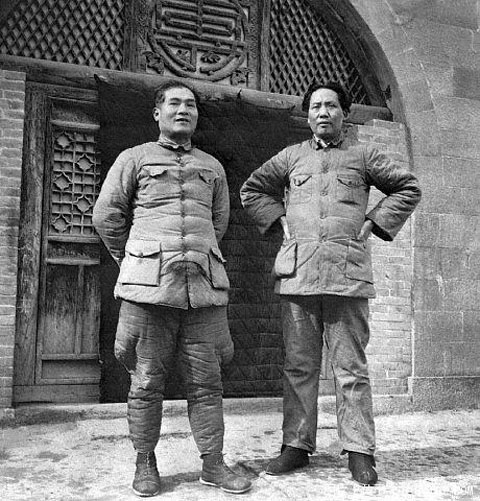
By the 1930s, Chang commanded an army of 80,000 soldiers, eclipsing Mao’s forces and positioning himself as a potential leader of China’s Communist future. During the Long March, Chang and Mao briefly allied, but then their rivalry deepened. Mao’s political cunning and strategic maneuvering ultimately sidelined Chang, whose forces suffered devastating losses in Gansu. In 1938, Chang broke with the Party and sought refuge in Hong Kong, where he lived in relative obscurity and began writing his memoires.
His rise and fall unfolded within a revolutionary movement marked by internal purges, shifting alliances and immense human cost — dynamics that shaped, and ultimately limited, his place in China’s history.
In 1968, Chang immigrated to Toronto, joining his sons and settling into a quiet life far removed from the ideological battles that once defined him. His modest grave in Pine Hills Cemetery faces southeast toward China, a testament to a life that spanned revolution, exile and reinvention.
Chang’s presence in Toronto speaks to the city’s role as a sanctuary for global figures and a meeting point of histories. His story resonates with the themes of ambition, resilience and the human cost of political struggle. For Toronto’s Chinese community and beyond, Chang remains an icon, not for triumph, but for complexity. He embodies the paradox of power and vulnerability, reminding us that history is not only written by victors, but also by those who dared to challenge them.
Source:
• Wikipedia – Zhang Guotao (Chang Kuotao)
• Encyclopædia Britannica – Zhang Guotao
• Mount Pleasant Group – Kai Yin Chang
Photos: Public Domain, Wikimedia Commons


