
Mount Pleasant Cemetery
Plot K
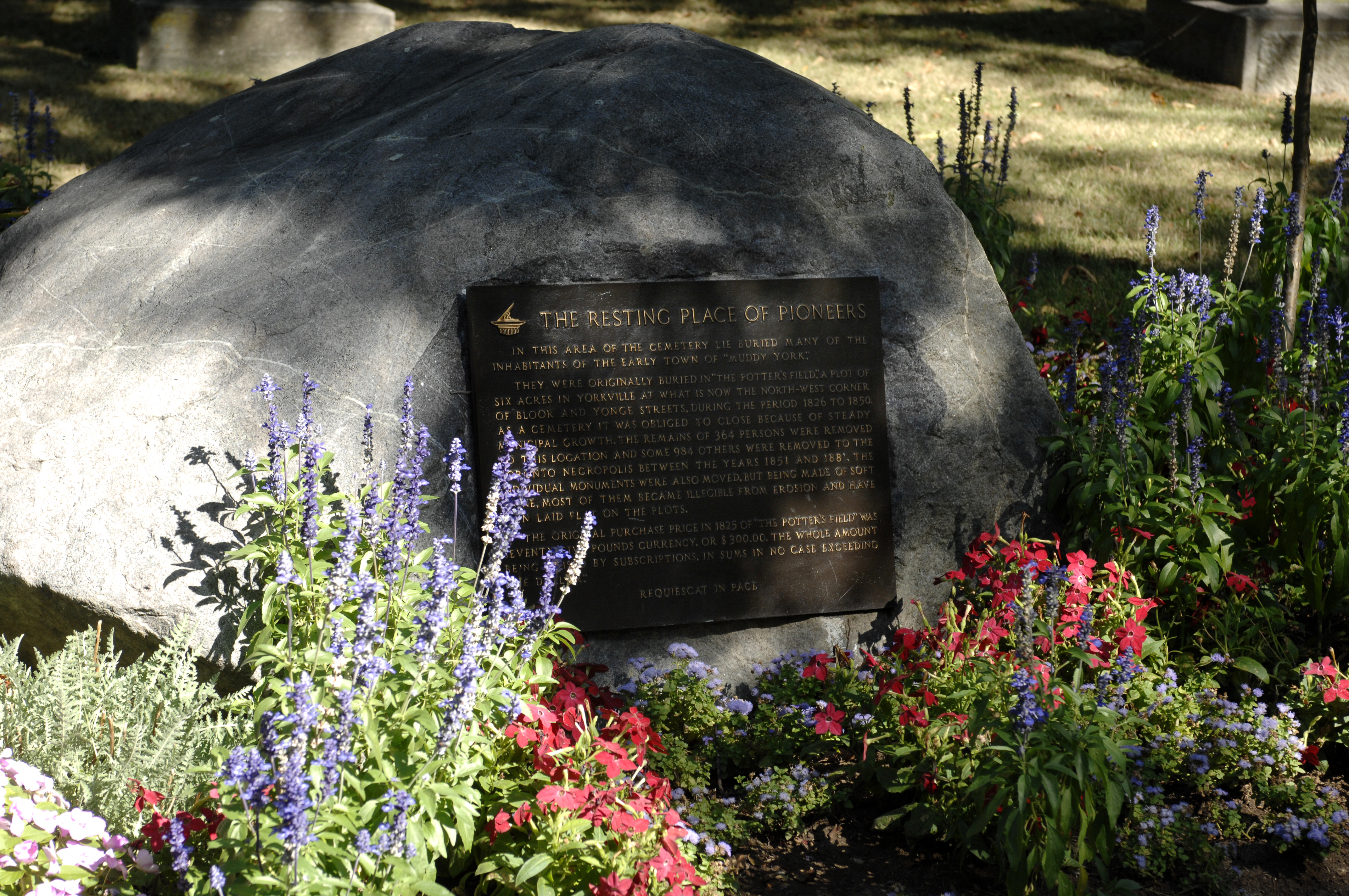
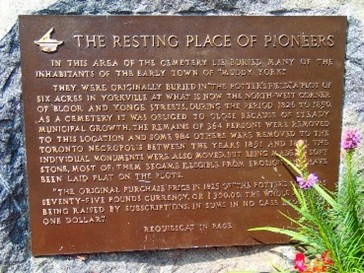
Hidden within the grounds of Mount Pleasant Cemetery lies Plot K, home to a memorial known as the “Resting Place of the Pioneers.” Beneath its quiet appearance are the remains of nearly 300 early settlers – individuals who helped shape Toronto’s beginnings and who, at the time of relocation, had no family able to claim them. Their journey to this final resting place tells a story of change, growth and resilience.
Originally, these pioneers were buried in the York General Burying Ground, commonly called Potter’s Field, at the northwest corner of Yonge and Bloor Streets. Established in 1826, Potter’s Field was Toronto’s first non-denominational cemetery, serving immigrants, those of limited means and people who did not have access to church burial grounds. For decades, it stood as a modest burial ground as the city around it continued to grow.
By the mid-1850s, urban development pressures mounted. As development pressures increased, the decision was made to clear Potter’s Field. Families reclaimed many graves, transferring their loved ones to the Toronto Necropolis in Toronto’s Cabbagetown neighbourhood. However, hundreds of remains could not be claimed or relocated by families. When Mount Pleasant Cemetery began development in the 1870s, these remains were respectfully reinterred in Plot K, a quiet corner that would serve as a symbolic link between Toronto’s pioneer past and its emerging future.
Almost a century later, a commemorative plaque was affixed to a large boulder in Plot K, acknowledging those whose stories were long absent from the public record. Today, this serene space stands as a reminder of Toronto’s transformation from a modest colonial town to a thriving metropolis. It invites visitors to reflect on the lives that built the city’s foundations, ensuring that even in anonymity, these pioneers are remembered with dignity.
Sources:
• Strangers’ Burying Ground (Potter’s Field) – Wikipedia
• Toronto Necropolis – Wikipedia
• Mount Pleasant Cemetery – Wikipedia
• Potter’s Field Cemetery – Toronto Historical Association
• Mount Pleasant Cemetery – Ontario Heritage Trust
Photos courtesy of Mount Pleasant Group


