
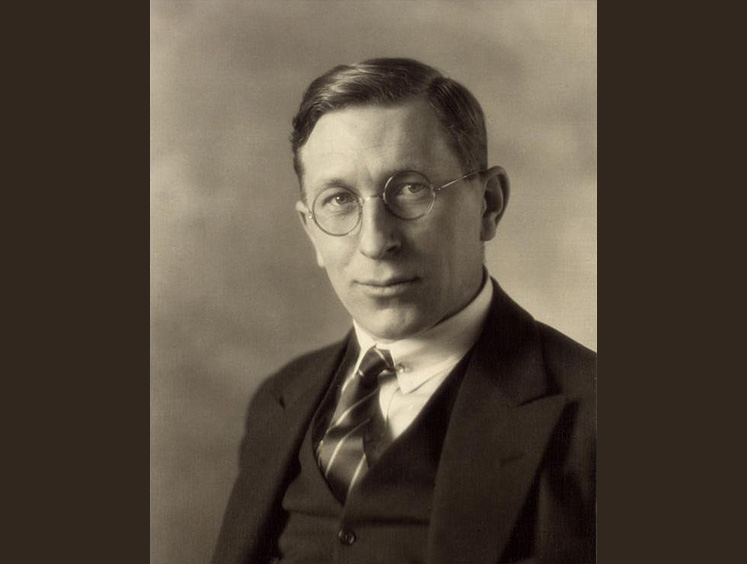
1891–1941
Mount Pleasant Cemetery
Section 29 Lot 29
Sir Frederick Grant Banting was a Canadian physician whose discovery of insulin amounted to a medical miracle, transforming medicine and saving untold millions of lives. Born in Alliston, Ont., Banting graduated received his medical degree from the University of Toronto in 1916 before serving as a medical officer during World War I, where he earned the Military Cross for bravery at Cambrai.
After the war, Banting abandoned a struggling medical practice to pursue diabetes research. In 1921, working with Charles Best in the lab of J.J.R. Macleod at the University of Toronto, Banting successfully isolated and purified insulin, a breakthrough that turned a fatal disease into a manageable condition. For this achievement, Banting and Macleod received the 1923 Nobel Prize in Physiology or Medicine, and Banting famously shared his prize money with Best. His generosity extended to selling the insulin patent to the university for $1, ensuring it would remain affordable to make and obtain. The discovery’s legacy has since been discussed with nuance, as historians continue to examine the contributions of the broader research team, including Best and James Collip, alongside Banting and Macleod.
Knighted in 1934, Banting continued research during World War II, focusing on aviation medicine and chemical warfare. On February 21, 1941, while on a top-secret mission to Britain, his Hudson aircraft crashed near Musgrave Harbour, Newfoundland. Banting died of his injuries at age 49. His funeral at Convocation Hall prompted national mourning, followed by a procession to Mount Pleasant Cemetery, where he rests as one of Canada’s greatest heroes.
Sources:
• Wikipedia – “Frederick Banting”
• Britannica – “Sir Frederick Grant Banting”
• Mount Pleasant Group – “Frederick Banting”
• NobelPrize.org – “The Nobel Prize in Physiology or Medicine 1923 – Frederick G. Banting”
Photos:
• Frederick Banting - Public Domain, Wikipedia
• Monument - Courtesy of Colin Clark


