
1861–1933
Mount Pleasant Cemetery
Plot U Lot 68
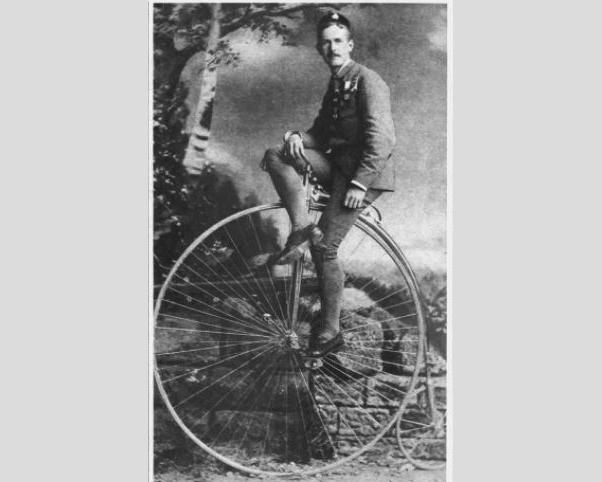
Born near Aylmer, Ont., Perry Ernest Doolittle displayed an inventive spirit from an early age. At just seven years old, he assembled his first bicycle from scraps found in his family’s basement. This passion for cycling grew into a competitive career, and between 1881 and 1890, he won more than 50 cycling trophies, including the Canadian Championship in 1883.
Doolittle’s fascination with wheels extended beyond bicycles. A lifelong tinkerer, Dr. Perry E. Doolittle is credited in local histories with constructing one of Canada’s earliest motorized bicycles in the late 19th century, years before domestic motorcycle production took off. He later turned his attention to automobiles, purchasing what was likely the country’s first used car, a Winton, in 1899. He even became one of Toronto’s first doctors to use a car for house calls. His love for driving sparked an unusual lifelong mission: to improve Canada’s roads.
While pursuing his mechanical interests, Doolittle excelled academically. He graduated from Trinity Medical School in Toronto with an MD and a master’s in surgery, then opened a practice on Sherbourne Street specializing in electro-therapeutics for arthritis. Yet even considering his achievements in medicine, his greatest legacy would come from his advocacy for better highways. He helped found the Toronto Automobile Club in 1903, the forerunner of today’s Canadian Automobile Association, serving as its president for more than a decade. During his tenure, he championed uniform traffic regulations across Canada, pushed for the adoption of the “keep to the right” rule in provinces that still drove on the left, and promoted the creation of a coast-to-coast highway.
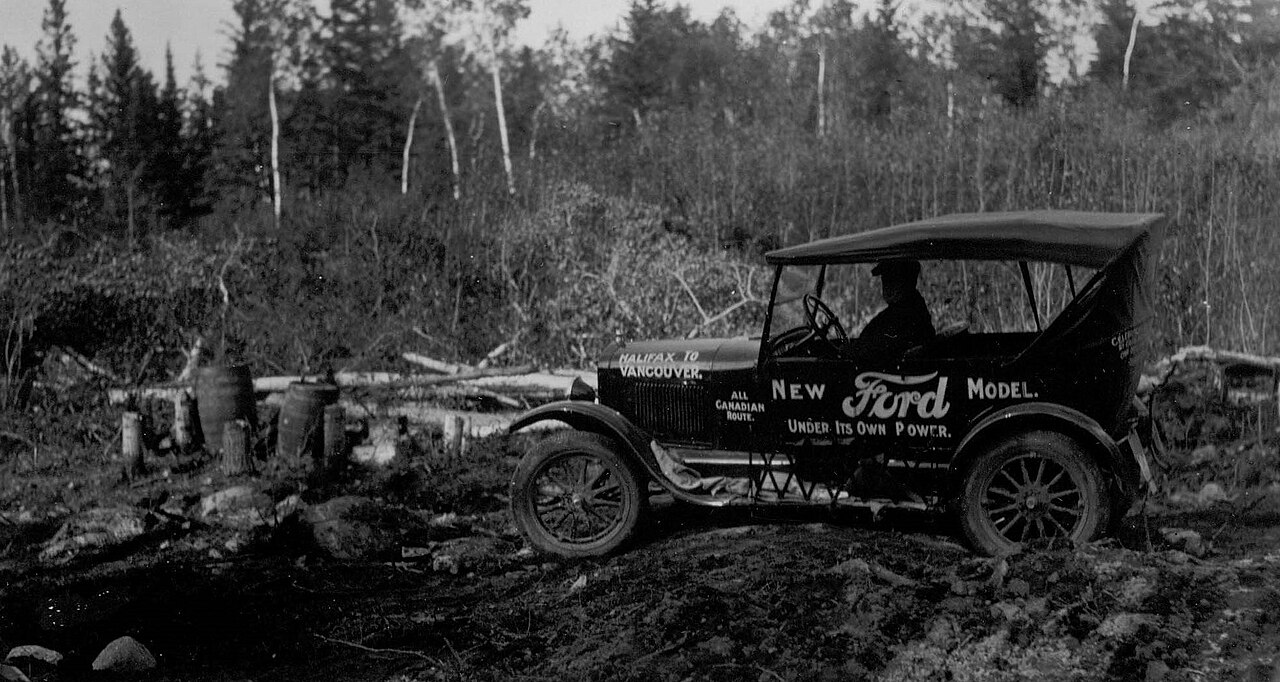
In 1925, Doolittle famously drove a Ford Model T from Halifax to Vancouver, a grueling 40-day journey that underscored the urgent need for a national highway. Incomplete roads forced him onto rail tracks for parts of the trip, but his determination galvanized public and political support for the project. Known as the “King of Canadian Roads,” Doolittle’s vision helped inspire the Canada Highways Act of 1919, and decades later, the Trans-Canada Highway became a reality in 1962, fulfilling the dream he had long championed.
Dr. Perry E. Doolittle passed away on December 31, 1933, at 72. Though he did not live to see the highway completed, his pathbreaking work earned him the title “Father of the Trans-Canada Highway,” a tribute to a man whose passion for automotives and progress changed the way Canadians travel.
Sources:
• Mount Pleasant Group – Dr. Perry E. Doolittle
• CAA Magazine – Dr. Doolittle, Founder of the CAA
• The Dictionary of Canadian Biography – Perry Ernest Doolittle
Photos:
• On bicycle - Unknown author, Public domain, via Wikimedia Commons
• Car - Edward William Flickinger (1885-1944), Public domain, via Wikimedia Commons


