
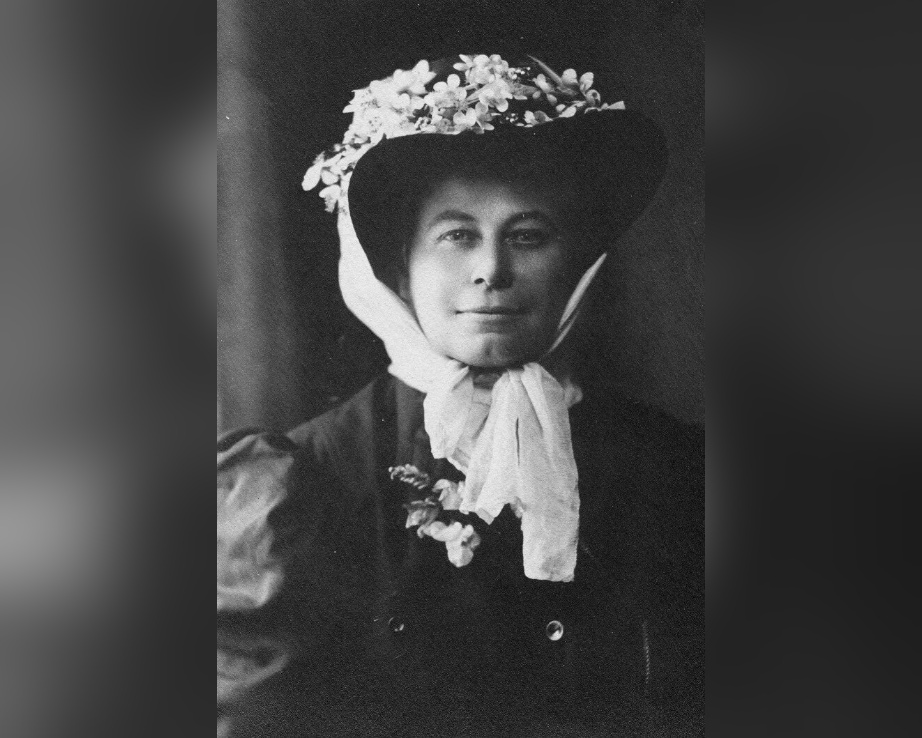
1859–1953
Toronto Necropolis
Section R Lot 12
Born in Toronto, Alice Eastwood defied the expectations of her era to become one of North America’s most influential botanists. At a time when women rarely held scientific leadership roles, Eastwood carved her own path, self-taught, fearless and determined. After moving to Denver in 1873, she mastered botany using guides like Gray’s Manual and Flora of Colorado, going on to build Colorado’s first plant collection and publish A Popular Flora of Denver, Colorado in 1893.
In 1891, Eastwood joined the California Academy of Sciences, eventually leading its Department of Botany for decades. Her foresight in separating type specimens proved critical during the 1906 San Francisco earthquake, when she heroically saved 1,211 irreplaceable samples – a decisive act that preserved the state’s foundation of modern botanical research. By the time she retired, she had grown the herbarium to over 350,000 specimens and authored more than 300 scientific publications, achievements that placed her among the most prolific botanists of her era.
Eastwood’s career broke many barriers: in 1903, she was one of only two women featured in American Men of Science, marking her as among the top 25 per cent of professionals in her field. She explored rugged terrain in long skirts, sometimes converting them into makeshift pantaloons and championed conservation, helping ensure the protection of Muir Woods National Monument and Mt. Tamalpais State Park.
Alice Eastwood died in San Francisco on October 30, 1953, at age 94. Her legacy lives on in species like Eastwoodia elegans and Aliciella, and in the conservation ethic she helped inspire. Her work continues helped lay the foundation of modern botany in North America and reminds us of the importance of protecting biodiversity in the interest of future generations.
Sources:
• Wikipedia – Alice Eastwood
• National Parks Service – Alice Eastwood
• Cabbagetown People – Alice Eastwood
Photo: Alice Eastwood, 1909, California Academy of Sciences by Dr. Gustav Eisen, Public domain


