
Mount Pleasant Cemetery
Section V Lot 174
In the heart of Mount Pleasant Cemetery lies a couple whose names are synonymous with innovation, global enterprise and cultural preservation; though their legacy is not without controversy. Thomas J. Bata and Sonja I. Bata built a footwear empire that spanned continents, wars and decades of transformation, leaving a mark on the Canadian footwear industry and shoe design while raising complex questions about ethics and global expansion.
Born in Prague on September 17, 1914, Thomas Jan Bata, known worldwide as the “Shoemaker to the World,” was destined to lead the family business. His father, Tomáš Sr., founded the T & A Bata Shoe Company in Zlín, Czechoslovakia in 1894, innovating mass production techniques that would revolutionize footwear. When his father died in a plane crash in 1932, 17-year-old Thomas inherited not only a company but a vision: to make quality shoes affordable for everyone.
Under his leadership, Bata expanded globally, installing factories across Asia, South America and Africa. By the 1960s and 70s, Bata shoes had become iconic, especially the white canvas sneaker that became a staple in developing nations. Bata’s approach mirrored the innovation of Ford’s assembly-line, but with a human touch: fair wages, social programs and sports facilities for employees.
Anticipating the Second World War, Thomas moved to Canada in 1939, founding Batawa, Ont., a town built around a shoe factory and engineering plant. During the war, his Canadian operations produced strategic components for the Allies, while he worked closely with the Czechoslovak government-in-exile. After the war, communist nationalization in Czechoslovakia forced Bata to relocate its headquarters to England, and eventually to Toronto, in 1964. From there, the Bata Shoe Organization grew into a global powerhouse: by 1975, it operated in 89 countries, producing 250 million pairs of shoes annually. In 1972, Thomas Bata was presented with Canada’s highest civilian honour, the Companion of the Order of Canada.
However, his legacy was complicated by several controversial moves by the company. In the late 1930s, Bata authorized the provision of boots to Mussolini’s army—Mussolini being Italy’s fascist dictator—a decision reflecting the difficult balance between ethics and survival during turbulent times. During Bata’s expansion into Africa, the company operated factories in apartheid South Africa, benefiting from discriminatory labour practices and displacing local footwear producers. Bata eventually withdrew in 1986, citing economic deterioration and pressure to divest, though was viewed by some as financially motivated rather than a moral stance.
Thomas remained at the helm until 1984, guiding the company through decades of expansion. Even after retiring, he continued to travel and advise, maintaining ties with world leaders and business innovators. He passed away on September 1, 2008, at age 93.
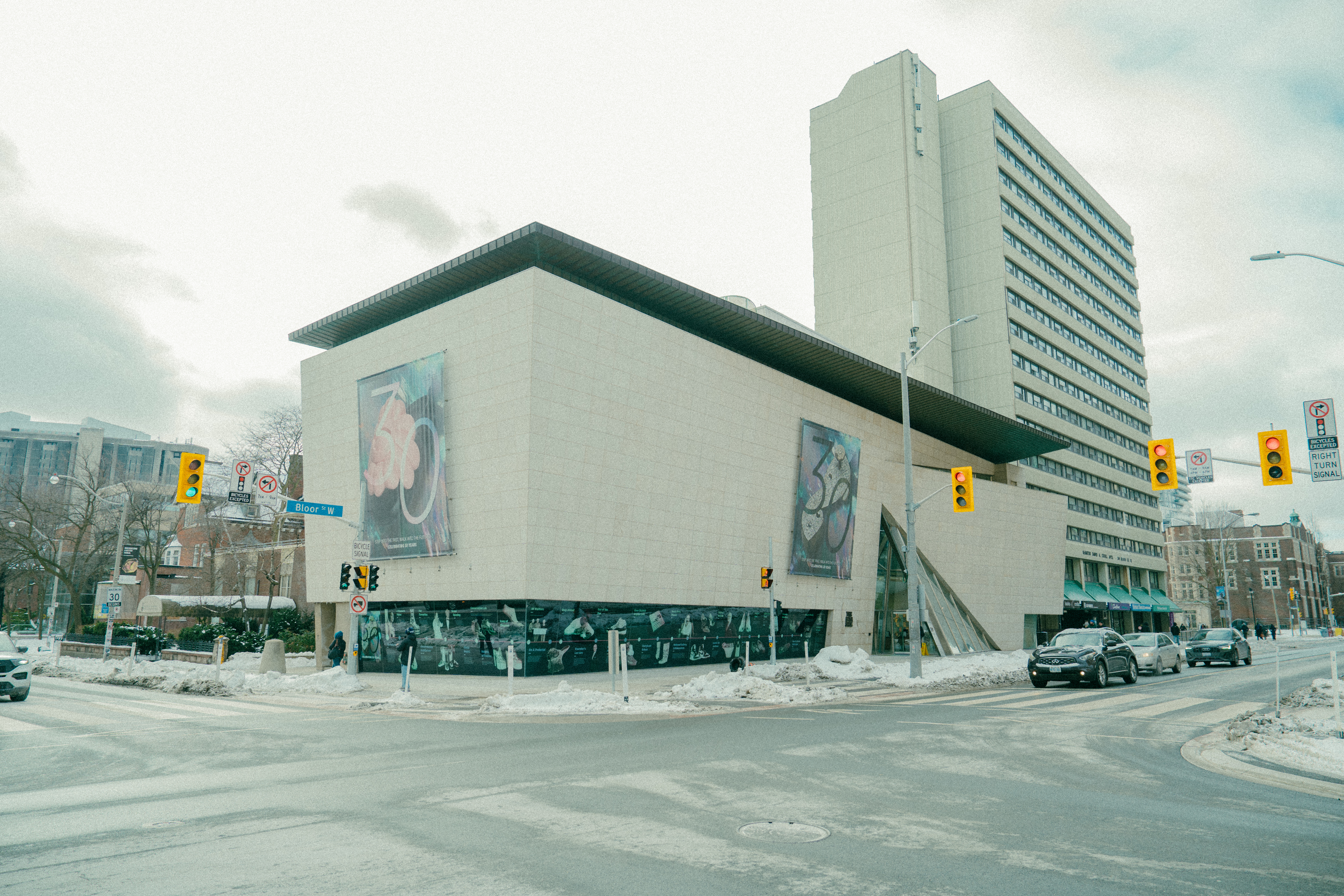
Beside him rests Sonja I. Bata, born in Zurich, Switzerland on November 8, 1926. Trained as an architect, Sonja envisioned a career in design, but after marrying Thomas in 1946, she redirected her talents toward the family business and cultural philanthropy. Her fascination with footwear history led her to establish the Bata Shoe Museum Foundation in 1979. In 1995, the Bata Shoe Museum opened its doors in Toronto, the largest shoe museum in the world. Sonja’s passion for design extended beyond shoes: she chaired the National Design Council, helped found the Toronto French School, served on boards of major institutions and championed environmental causes through the World Wildlife Fund. In recognition of her contributions, she was appointed an Officer of the Order of Canada in 1983. Sonja Bata died on February 20, 2018, at age 91, leaving a legacy of cultural stewardship and design excellence.
Their shared resting place is more than a grave – it is a monument to business and philanthropic visionaries who shaped industries, communities and cultural institutions. To walk past their names is to encounter a story of resilience, innovation and enduring impact.
Sources:
• The Canadian Encyclopedia – Bata Shoe Muesuem
• The Canadian Encylopedia – Thomas J. Bata
• CBC News – “Thomas Bata dies at 93”
• The Globe and Mail – Archives (Bata Coverage)
• Bata Shoe Museum – Official History & About Page
• Governor General of Canada – Order of Canada Recipient (Thomas J. Bata)
• Trent Arthur – “What’s in a Name? The Case Against Bata Library”
• Mount Pleasant Group – Thomas Bata Story Archive
Photo: Courtesy of Colin Clark


