
Mount Pleasant Cemetery
Location: See if you can spot them!
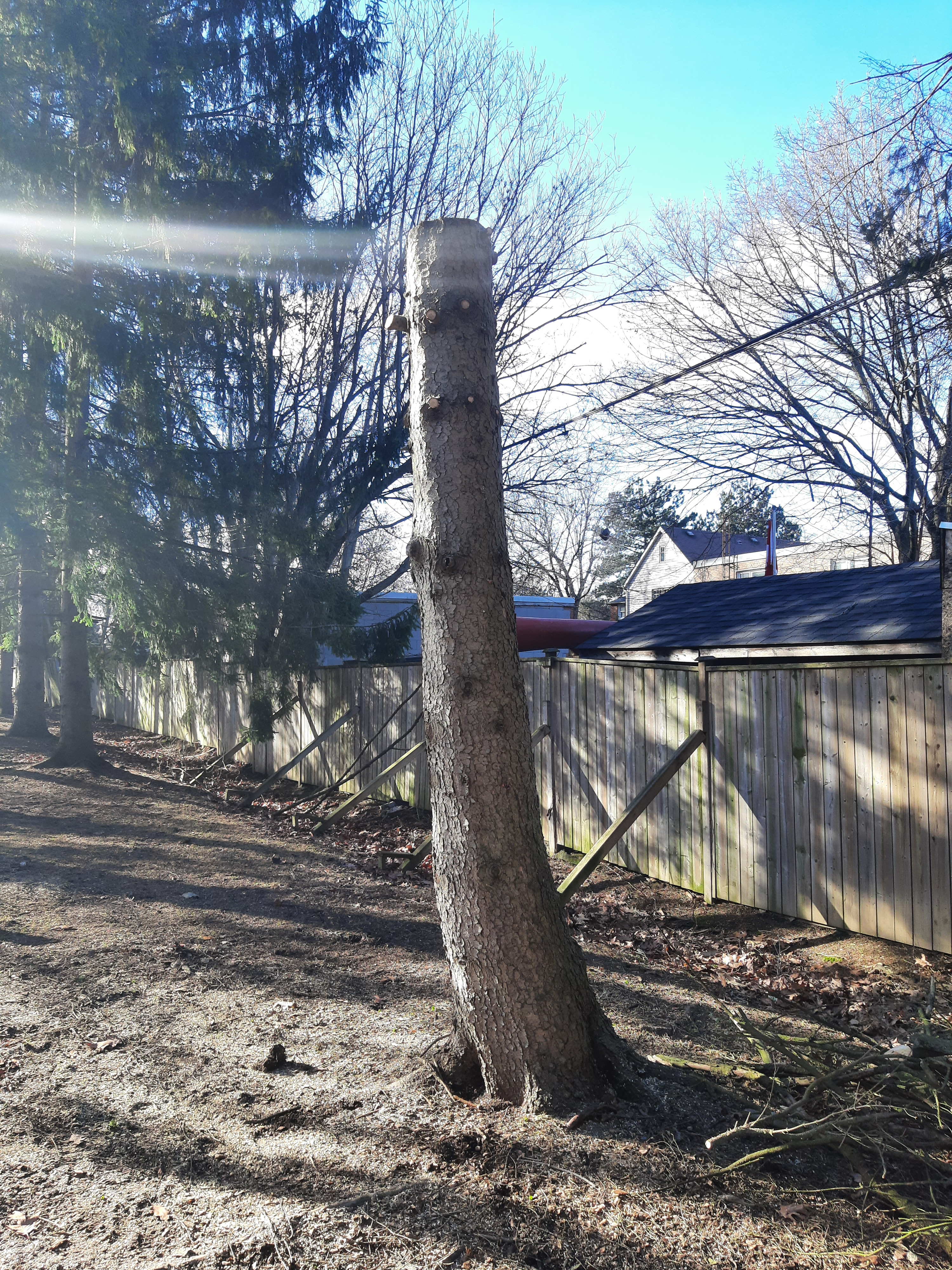
Across the grounds of Mount Pleasant Cemetery, visitors may notice something unexpected: tall, branchless tree trunks rising quietly among the living canopy. These are snags, standing dead trees, intentionally preserved whenever possible as part of MPG’s commitment to supporting local ecology.
A snag may look simple at first glance, but it plays one of the most important roles in a natural landscape. When a tree dies or becomes terminally diseased, its value doesn’t end. Instead, it transforms into a vertical habitat that supports an entire community of living things. Cavities in the wood shelter small mammals; crevices become homes for butterflies and overwintering insects; and woodpeckers, nuthatches and owls rely on snags for nesting, feeding and roosting. In a city where natural habitat disappears each year, these quiet giants help keep urban ecosystems thriving.
In our cemeteries, safety must always come first. A fully dead tree can pose a risk of falling, especially as weather, age and decay weaken its structure. To balance ecological care with public safety, our arborists often remove a dead tree’s branches and upper height, leaving a trimmed, stable trunk behind. What remains is a safe snag, one that continues to provide habitat without posing a hazard to visitors, staff or nearby monuments.
Not every dead tree can become a snag. Families may express concern about aesthetics, and in some areas, the landscape design or proximity to graves doesn’t allow for them. But wherever appropriate, especially along woodland edges, naturalized areas and boundary lines, we preserve snags intentionally. They are subtle, often overlooked and rarely celebrated, but they are among the most meaningful ecological features on our properties.
Snags are a reminder that life continues in many forms, even in the stillness of a dead tree. They quietly support birdsong, shelter, pollinators and the health of our urban forest, helping our cemeteries remain not only places of memory, but also thriving pockets of biodiversity in the heart of Toronto.
Source: Mount Pleasant Group Arboretum Team


