
Mount Pleasant Cemetery
Plot U
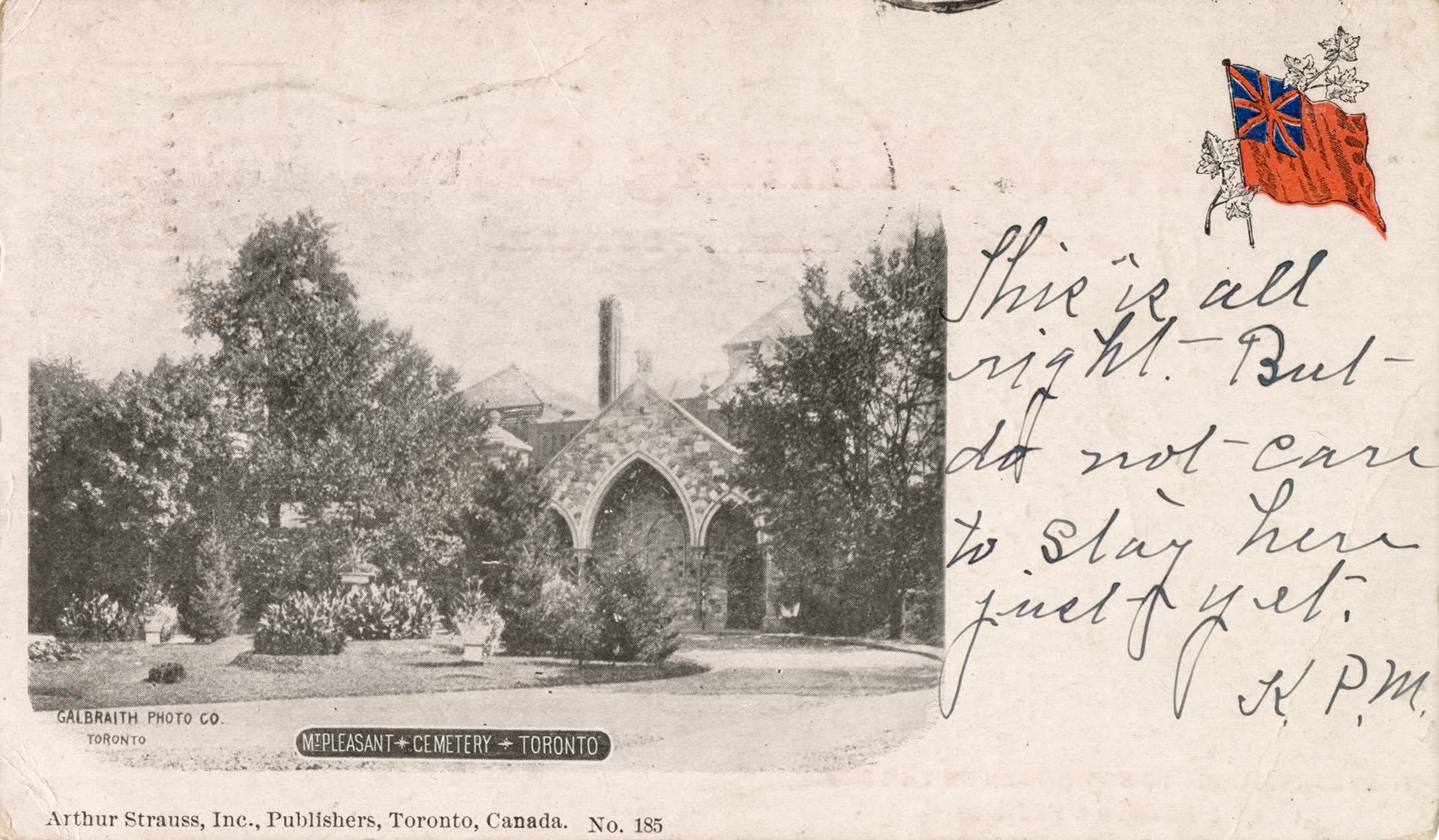
When Mount Pleasant Cemetery opened in 1876, it represented the height of Victorian cemetery planning. Winding pathways, ornamental plantings and carefully designed buildings created a park‑like retreat from the growing industrial city. Among its earliest buildings was one of the cemetery’s most essential yet understated features: the Receiving Vault, a classic example of Canada’s early dead‑house tradition.
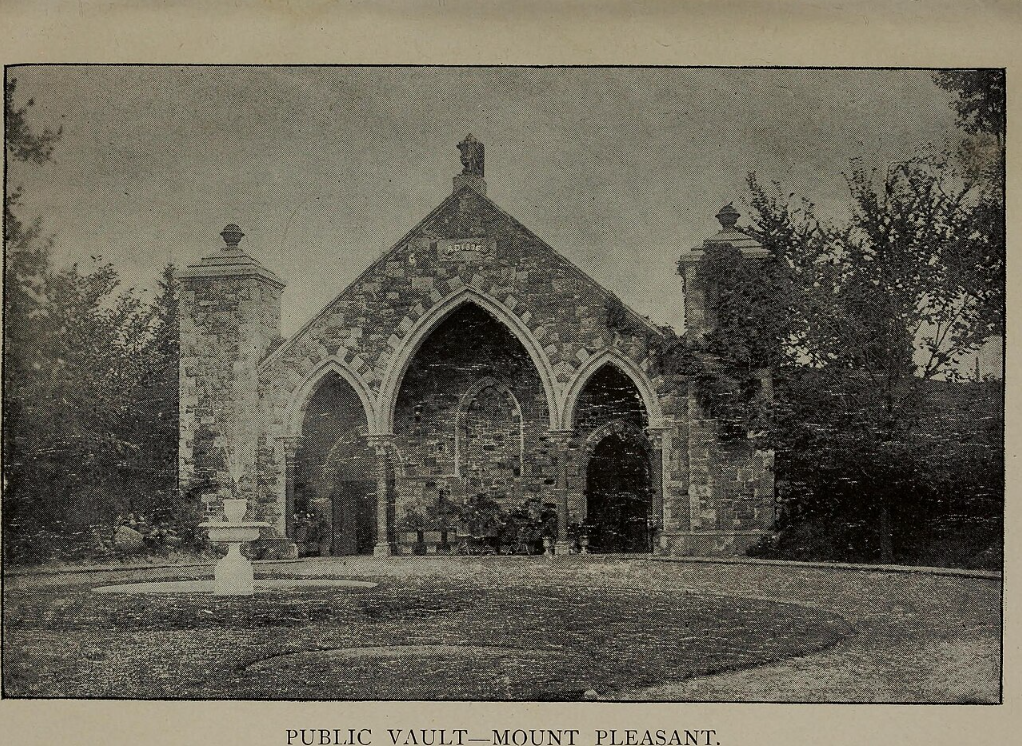
Mount Pleasant’s original 1876 Receiving Vault stood opposite the cemetery’s first entrance, built directly into the hillside in Plot U. Designed in the Gothic style, it featured architectural details meant to embody permanence and solemnity, most notably its columns of Bay of Fundy granite, which framed the entrance with a sense of dignity and strength. Functional but thoughtfully constructed, the vault was an integral part of the cemetery’s early infrastructure.
Like many dead houses across Ontario, the vault existed to solve a uniquely Canadian problem: winter burials. In the 19th century, the ground froze so deeply that graves could not be dug for months at a time. Even as Mount Pleasant offered a more modern, park‑like vision of burial, it still required a structure that could care for the dead through the long winter. This vault was capable of holding up to 300 caskets, a testament to the severity of the climate and the volume of burials managed by the city.
Inside, the vault was cool, quiet and built to preserve dignity. Caskets rested on platforms until spring thaws or until families could gather for services. For many Torontonians, it served as a temporary sanctuary, bridging the time between death and burial during storms, freezes or logistical delays. It provided order and compassion when the elements made funerals impossible.
As Mount Pleasant expanded, adding chapels, mausoleums and administrative buildings, the need for the receiving vault diminished. Mechanized excavation replaced manual digging, funeral homes acquired refrigeration and Toronto’s infrastructure modernized. Eventually, the original vault was retired, but its legacy remains central to understanding the cemetery’s beginnings.
Today, the site where the vault once stood reflects Mount Pleasant’s evolution from a Victorian burial ground into a heritage landmark. Though the receiving vault no longer survives, its memory lives on as a symbol of 19th‑century ingenuity: a blend of practicality, architectural care and the enduring human commitment to honour the dead with dignity, even in the face of Canada’s harsh winter landscape.
Source:
• Dead Houses of Ontario – Catalogue & Historical Overview
Photo: Toronto Public Library, Baldwin Collection of Canadiana, Public domain


